
Mission #16: Your database is a node now


Every real pipeline eventually needs somewhere to put the embeddings, records and files it produces. So you provision a vector database, wire up Postgres, find object storage, and manage three sets of credentials before a single node runs. Nobody's favorite part of the job.
That part is already a node. RocketRide carries seven database nodes, two graph stores and ten vector databases on the same canvas, so the store stops being infrastructure you stand up and becomes a node you drop in. And the part built for real applications: the pipeline that writes and the application that reads point at the same store. An agent scans a thousand pages and fills a table; your product reads the results back through the same node. Wire an LLM into a database node and it writes the SQL itself, because that is the node's job.
Provisioning was never the interesting part of your work. Now it is a node on the canvas, not a project.
What is on the canvas today
Three families sit on the canvas. Under DATABASE: Aparavi AQL, ArangoDB, ClickHouse, HydraDB, MySQL, PostgreSQL and Supabase. Under GRAPH: FalkorDB and Neo4j. Most of them take a question in and hand back a table, text or a set of answers, and those need an LLM connection, because writing the SQL or the Cypher is the node's job. Under STORE, ten vector databases: Astra DB, Chroma, Elasticsearch, Milvus, MongoDB Atlas, OpenSearch, Pinecone, PostgreSQL with pgvector, Qdrant and Weaviate. Those match on meaning rather than querying, so documents and questions both arrive through an embedding node, and no LLM is needed at all.
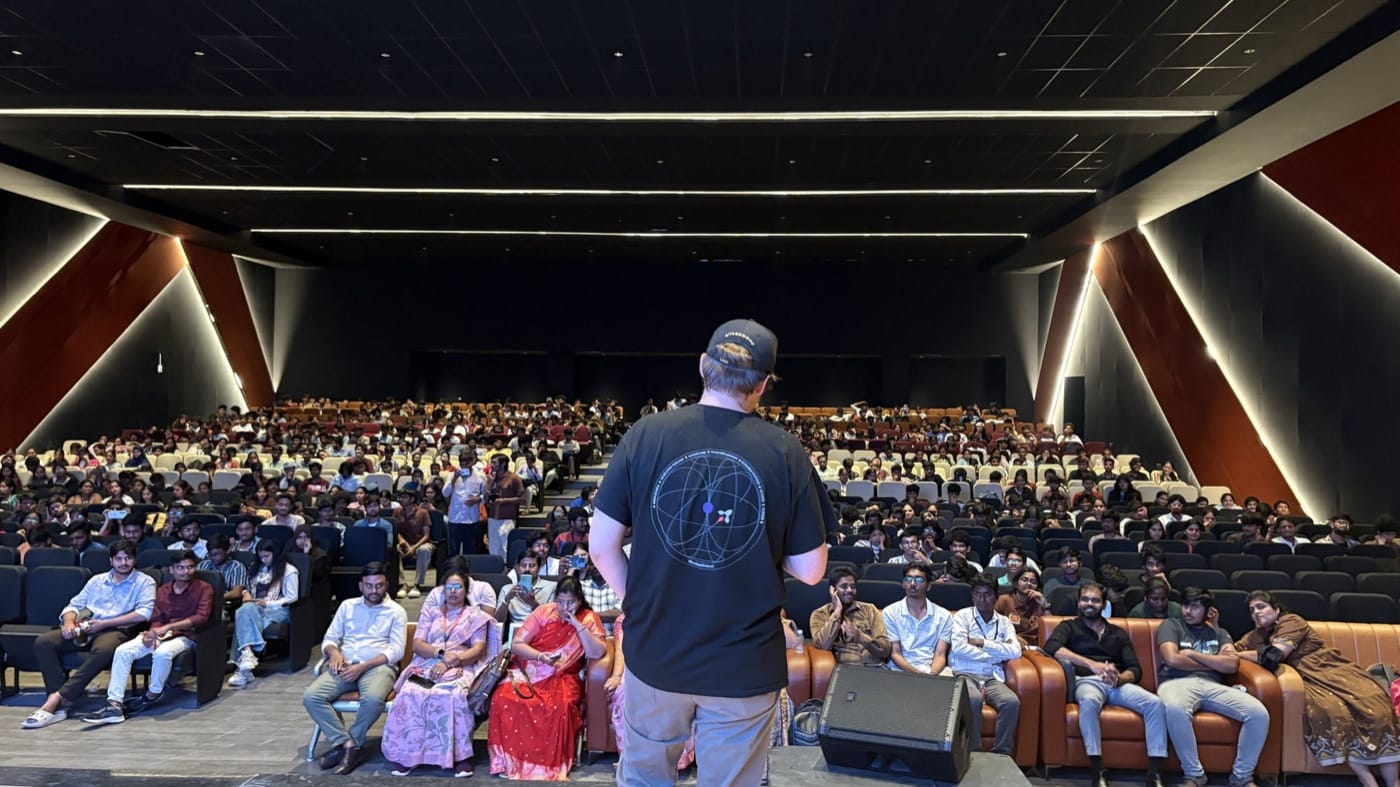
Four Buildathons, four cities, and one habit in every winning project: a human approval gate on the action that carries real risk.
- 🥇 Lucknow, 21 August, 725 registered. Tensor Titans won with PRATIGYA, which turns rejected hospital insurance claims into citation-backed statutory appeals, with a human safety gate on high-value claims.
- 🥇 Delhi, 22 August, 967 registered. DEVOX won with Ad Spend Autopilot, which moves ad budgets in real time behind a deterministic policy engine and a human-in-the-loop approval center.
- 🥇 Hyderabad, 22 to 23 August, at Malla Reddy University, run with the campus as HakITxMRDU'26.
- 🥇 Mumbai, 29 August, 370 registered. HackHer won with BidFactory, which answers enterprise RFPs end to end using hybrid vector and BM25 retrieval, with human approval on the ambiguous calls.
Every event ran an INR 15,000 prize pool plus swag and certificates, with projects posted to #showcase on the RocketRide Discord.
🚀 And there are three more, all in the next two days. RocketRide Office Hours runs online and BuildFest runs in San Francisco, both on Thursday, September 10. Then the Data and AI Hackathon takes over the AWS Builder Loft on Friday, September 11. Three chances this week to put a pipeline in front of people who will tell you the truth about it.
The week's AI news that changes how you build.
GPT-6 Astra's safety monitor can stop your job mid-run.
OpenAI announced GPT-6 Astra on 3 September at $10 per million input tokens and $50 per million output, with a Fast mode at twice the speed and twice the price. It ships as gpt-6-astra in the API and through Microsoft Azure and Amazon Bedrock, off by default for enterprise workspaces. OpenAI calls it the first model to reach the Critical cybersecurity threshold under its own Preparedness Framework, and says the safety checks that come with it can slow, pause, or stop legitimate work: in ChatGPT or Codex you may be asked to review the action, and in the API the task will stop. A provider monitor that halts a long agent run mid-flight is a failure mode your pipeline has to handle.
Nvidia has agreed to buy the place your open weights live.
Nvidia announced a definitive agreement on 3 September to acquire Hugging Face for $12.93 billion, expected to close in the first half of 2027 subject to regulatory approval. The platform carries more than 18 million developers, over 3 million models and 500,000 datasets, used by more than 200,000 companies. Nvidia committed to keeping it open to the whole ecosystem, said developers keep their choice of models, frameworks and clouds, and stated that Nvidia compute will not be required to build on or deploy through it. If a build step in your pipeline pulls weights from Hugging Face, that openness is now a commitment rather than a contract you hold.
Agent security now has a standard that outlives your framework choice.
The OWASP GenAI Security Project released its Agent Control Standard on 1 September, alongside the 2026 Top 10 for LLM Applications. The standard defines how an agent platform exposes middleware hooks and how safety policies are enforced through them, so controls are declarative, portable across frameworks and enforced at runtime rather than bolted to one platform. The Cloud Security Alliance reads it as specification version 0.1 with samples still unreleased, an architecture to plan against rather than a control you can deploy today. Runtime enforcement that survives a framework swap is worth designing for now, while it is still a specification and not yet a migration.



Member discussion