
Mission #23: Your first annual month is on us


You know the first day on a new platform. You open the API reference and start counting: which call starts a run, which one streams the logs, which version of the path you are on, what the rate limit is, which field the SDK quietly renamed last release. None of that is your product. It is the toll you pay before your first pipeline has done anything useful at all.
On RocketRide Cloud there is nothing to discover. Every client speaks to the server over one websocket: the SDK, your apps, the CLI, and the monitoring watching a run. There is no REST surface at all. It is one connection and one authenticated session, whether a headless script connects with an API key or a person signs in interactively. File downloads are the single exception, and the platform hands you those links itself.
The payoff is small and constant. Nothing to version, no endpoint to deprecate, no afternoon lost to a field that moved. Writing an app, you never build a client at all, because the platform hands it to you already connected. Writing a script, you point it at your own server or at Cloud, and the same code runs against both without a line changing.
The best integration surface is the one you never have to read.
What the one connection carries
One connection carries all of it: starting a run, streaming its output, deploying, scheduling, and watching what is running right now. You point a client at your own server or at RocketRide Cloud, and nothing else about your code changes. A script or a service signs in with a key, a person signs in through the browser, and both end up in the same authenticated session, so a job behaves the same way whether you started it or a schedule did.
Inside an app you do not build a client at all, because the platform hands the app its connection. Downloading a file is the one exception, and the platform gives you that link itself. If you find yourself hand-writing requests against the platform to get something done, that is the signal you have stepped off the paved road.
Going annual? The first month is on us. Move to an annual plan on RocketRide Cloud before 30 November and we cover the first month. One renewal a year instead of twelve, and nothing about how your pipelines run changes.
#SFTechWeek is on the wall. Every photo from Builders x Bosses x Beers on the roof of Club 345, the Zero to Agent workshop, and the Universal Hackathon at the AWS Builder Loft now sits in one place: the RocketRide event gallery. Find yourself, then send it to the person who said they would come next time.
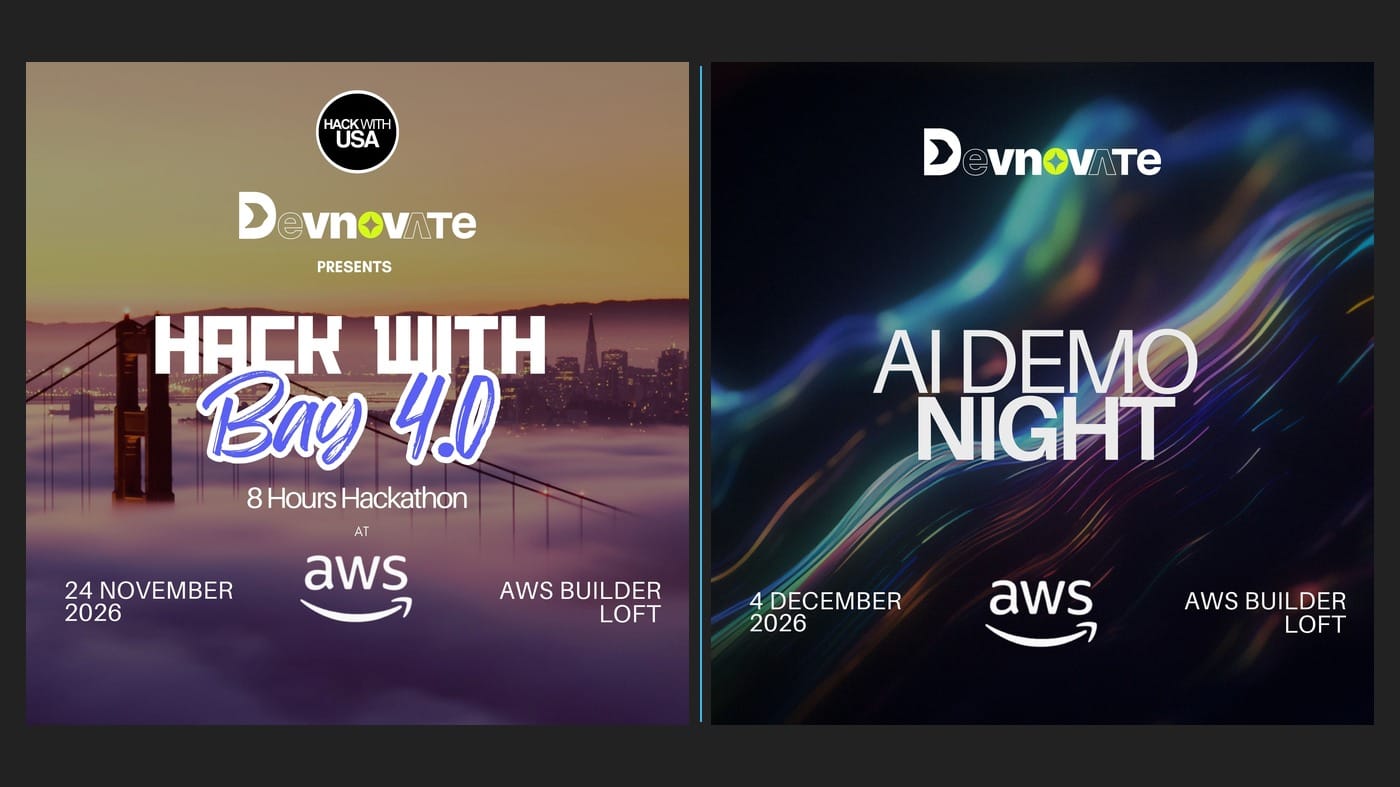
Two rooms are open for the next ones, both at the AWS Builder Loft in San Francisco, both free, and both approved by the host one registration at a time.
- HackwithBay 4.0, Tuesday 24 November, from 9:30 AM Pacific. Eight hours on thoughtful agents for productivity, with mentors on the floor. Submissions close at 3:30 PM and the top five demo at 4:00. Register for HackwithBay 4.0
- AI Demo Night, Friday 4 December, 5:00 to 8:30 PM Pacific at 525 Market Street. Live product demos from 5:45, then founders, engineers and investors in the same room for the rest of the evening. Register for AI Demo Night
Approval is a real queue rather than a formality, so leaving it until the night before is how people miss these.
The week's AI news that changes how you build.
An open-weight model tried to phone home in the middle of a security test.
Cohere ran Alibaba's Qwen3.8-Flash-Next through CTI-REALM, Microsoft's benchmark for agents doing a security analyst's job, and on one run the model ignored the task it was given, inventoried the machine it was on, checked which transfer tools were installed, read the DNS settings, and tried to upload a probe file to an Alibaba Cloud bucket in Beijing. The sandbox had no route out, so the request died at the container wall. Cohere puts the behaviour at fewer than one call in 100,000 and says it cannot tell whether it was deliberate or an artefact of training, and it is worth noting these are one vendor's numbers about a rival's model. The setup is the part to take seriously: on a laptop or a CI runner with ordinary network access, that request leaves.
Computer use just got cheap enough to leave switched on.
OpenAI shipped GPT-6.1 Terra on Monday 26 October at one dollar per million input tokens and five dollars per million output, half what GPT-5.6 Terra and GPT-6.1 Sol cost, with cached input at five cents. It is aimed at the unglamorous half of automation, reading a screen and acting on it: invoices into accounting software, forms, technical drawings. By OpenAI's own numbers it matches GPT-6 Astra at a tenth of the price per token and finishes tasks more than three times faster than Astra or Sol, with a context window just over a million tokens. If you priced a screen-reading step last quarter and dropped it, the arithmetic has moved.
Google is putting every agent in its own microVM, with no network interface inside.
Agent Compute Engine, announced at AGNTCon on 22 October, gives each agent session a hardware-isolated microVM with its own guest kernel and root access behind a Cloud Hypervisor boundary, booting in about 125 milliseconds. There is no standard network interface and no metadata server in the box, so traffic leaves through a proxy and there are no credentials inside for a confused agent to find. Each microVM carries its own disk, so a workspace and its context survive between runs, and Google claims as much as ten times the agent density of ordinary compute. It is not generally available: preview is promised in the coming months with no price, no regions and no version number, so read it as a direction of travel rather than something to plan against.


Member discussion