
Mission #17: Rollback is repointing, not rebuilding

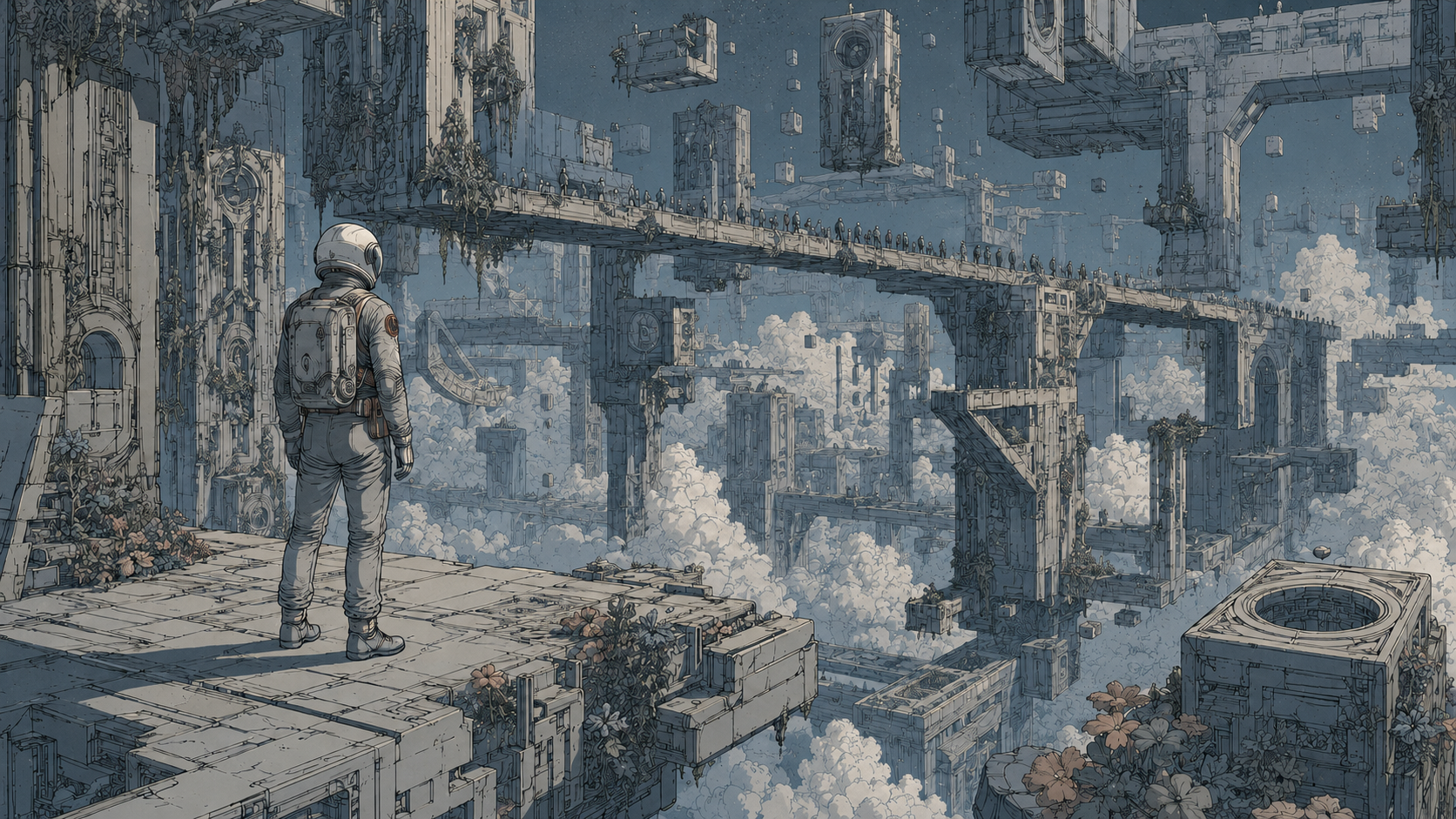
You changed one prompt. That was the whole change. Three weeks into production a quarter of the documents start coming back wrong, and you know exactly which version was good. Going back to it means a full rebuild, a fresh push, a cold start on the far side, and the broken version answering every request while you wait. The fix costs more than the mistake did.
On RocketRide Cloud deploying and publishing are two different things. Your pipeline is the graph of nodes doing the actual work: the model calls, the retrieval, the parsing, the agent steps, the wiring you would otherwise maintain by hand, or with your favorite coding agent. Deploy copies that pipeline to the server as the next immutable version, v1, v2, v3, and binds nothing. Nobody is served by it yet. Publish is the second act, and all it does is point one audience at one version: just you, your team, or the public.
That separation is what makes a rollback instant. One verb covers first release, update, promotion and rollback, because publishing is repointing, never rebuilding. Roll back and you are pointing at v2 again, and v2 has been sitting there built since the day you deployed it. Two people can be on different versions of the same app at the same time. Every repoint lands in an audit trail, and one call kills a deployment outright, schedules included.
You already built the version that worked. Getting back to it should cost a click, not a deploy window.
How the versions are kept
Publishing binds a deployed version to one of three audiences: just you, one team in your org, or the public store. Internal audiences serve immediately. The public one adds a review ladder, private to submitted to approved or rejected, with a two-way thread between you and the reviewer. There is no org-wide audience.
Review and build are two independent axes. Review is the human ladder; build is the machine one, queued to building to ok or failed. An approved version with a failed build still cannot serve, and a green build in review still waits for a person. Every artifact is sha256-verified server-side when it loads, so what runs is provably what you deployed.
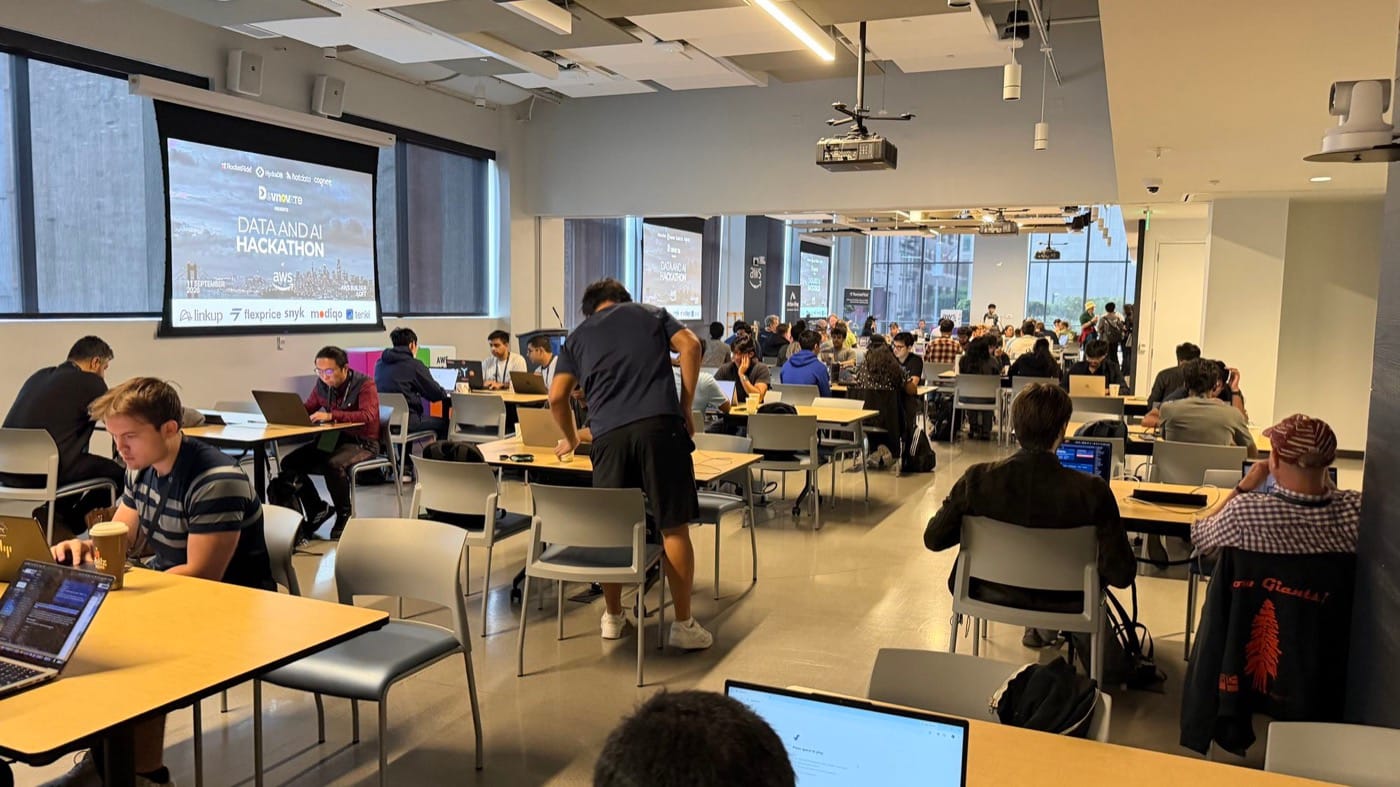
The RocketRide x SCU Buildathon winners are in. It ran online with AI Collaborate at Santa Clara University from 31 August to 6 September, 165 registered, and all three winners built and shipped on RocketRide Cloud. On Friday 11 September the Data & AI Hackathon followed at the AWS Builder Loft in San Francisco: eight hours, 561 registered, presented by Devnovate with RocketRide, HydraDB, Hotdata and Cognee as build partners.
- 🥇 Divjeev Sohi, first with Playbook: turns a kitchen recording or a handwritten recipe card into a structured training playbook.
- 🥈 Vaibhav Lalwani, second with Leverage: an MCP server that puts a workforce of cheaper models under your best one, and calls nothing done until your repo's tests pass.
- 🥉 Karanjit S, third with Recipe Rescue: turns a cooking video into a recipe a first-time cook can actually follow.
- 🏆 Commit Happens, winner of the Data & AI Hackathon with StorySprout: creates personalized illustrated bedtime stories that teach children aged two to four everyday lessons, and learns from parent feedback over time.
On Tuesday 15 September we hosted Week 32 of the Learning Layer Paper Reading Club at our San Francisco office, 41 Grant Avenue, with 54 registered. The paper was Aspire: Can Models Self-Evolve from Vague Goals?, a benchmark that gives an agent only a goal like "improve at research" and keeps the tests hidden. The authors report that agents finish their training and harness-editing loops, but weight-level gains stay sparse and unstable, and agents trust narrow self-evaluations that do not transfer.
🚀 One more before next Wednesday. SF Enterprise Hackathon 2.0 is on Monday 21 September, 9:30 AM to 5:30 PM Pacific, in San Francisco: one day on enterprise AI and agents, built for engineers, product managers, founders and data scientists. It is free, and every registration is approved by the host, so do not leave it until the morning.
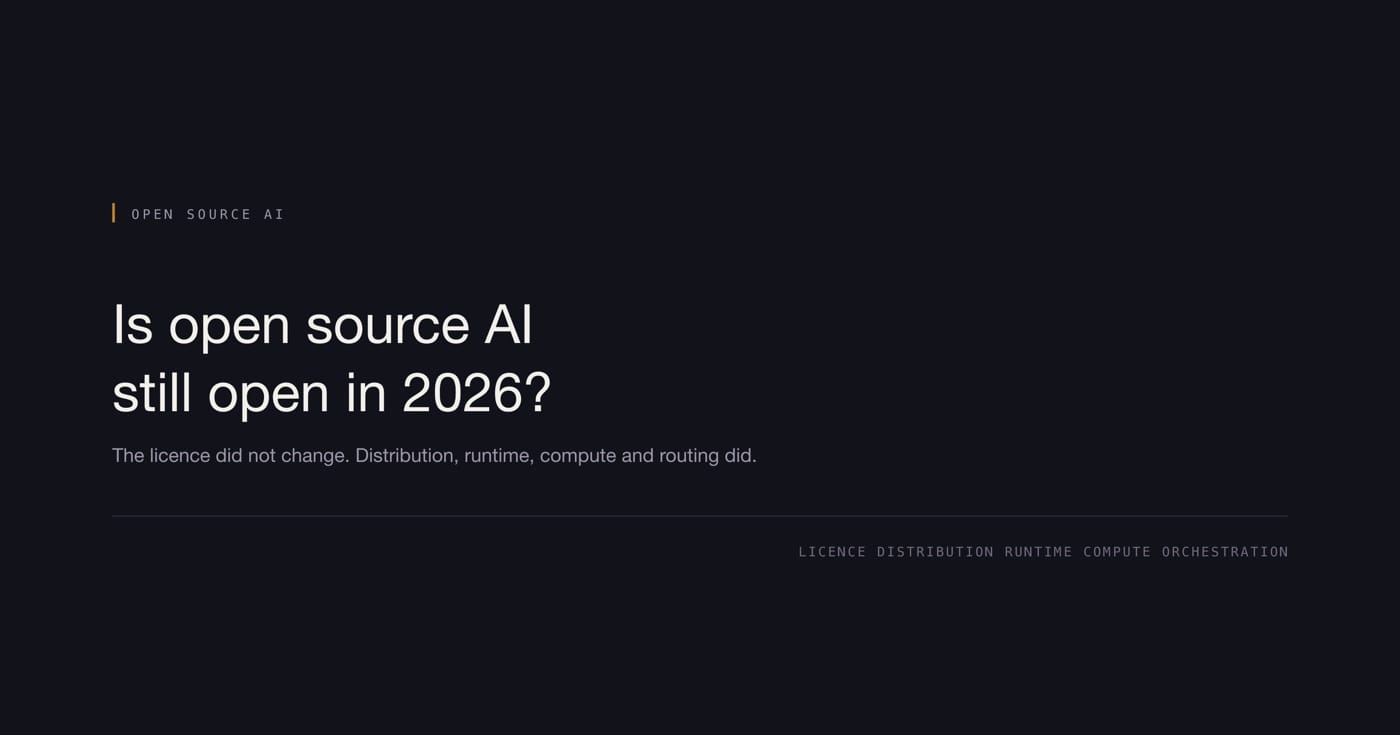
Mithilesh Gaurihar's answer is: partly. Open source AI in 2026 is still open by license and consolidating by ownership. No model was relicensed this year, but between 1 July and 1 September the distribution layer went into play, the routing layer was sold, and compute repriced. Mission #16 reported the Nvidia and Hugging Face agreement. This is what that kind of consolidation does to a stack.
His test is not what license the weights carry. It is how many independent companies would have to agree before your access could change, counted across five layers: license, distribution, runtime, compute, orchestration. Most teams score well on the first and badly on the other four, because the license is the only one that announces itself.
The post is unusually straight about where RocketRide stops. It covers one layer of the five, and does nothing about who owns the chips or where the weights are hosted. The five-layer audit, and how to score your own stack, are in the post.



Member discussion