
Mission #11

You know the drill. The pipeline needs transcription, OCR, embeddings, so somebody has to put GPUs behind it. That somebody is you. You size the instance, guess at peak load, and pick your poison: overprovision and watch money burn on idle metal, or underprovision and watch the nightly batch crawl. Then you babysit a cluster you never wanted, because the job that has to finish by 6am is yours.
RocketRide Cloud deletes that job. The models doing the everyday work in your pipelines, transcription, OCR, vision, embeddings, run on our GPUs, managed by the RocketRide Model Server, which exists only on Cloud. When your pipeline needs a fast processor, one shows up. When the batch finishes, it's gone. Your plan's tokens are spent only while something actually runs, so idle time costs you nothing.
This is built for the workloads you actually ship for companies: nightly jobs that spike and sleep, document volumes that swing by season, traffic that ignores your capacity plan. The economics finally match how production behaves. And you go back to the part of the job you chose.
How the Model Server works
Some models in your pipeline are API calls to someone else's infrastructure: the large LLMs from Anthropic, OpenAI, and the rest. Everything else, transcription, OCR, vision, embedding, transformer, and other non-large-LLM models, runs on RocketRide's own GPUs. The Model Server, exclusive to RocketRide Cloud, is the layer that manages them, so you never have to.
It optimizes execution with three mechanisms.
AI-powered hot/warm/cold loading. Model loading is managed across hot, warm, and cold tiers, with AI deciding what stays ready.
Model batching. Requests to the same model are grouped and executed together instead of running one by one.
Intelligent GPU routing. Workloads are routed to the right GPU automatically. You never pick a machine, size an instance, or plan for a peak that happens twice a year.
The result is on-demand AI compute. Bring a fast processor online when you need it; stop paying the moment you don't. Your subscription's tokens are consumed only while pipelines actually run. The unit economics are clear: no idle GPU bills, no overprovisioned clusters.
No idle GPU bills. No overprovisioned clusters. No capacity planner hiding in your job title.
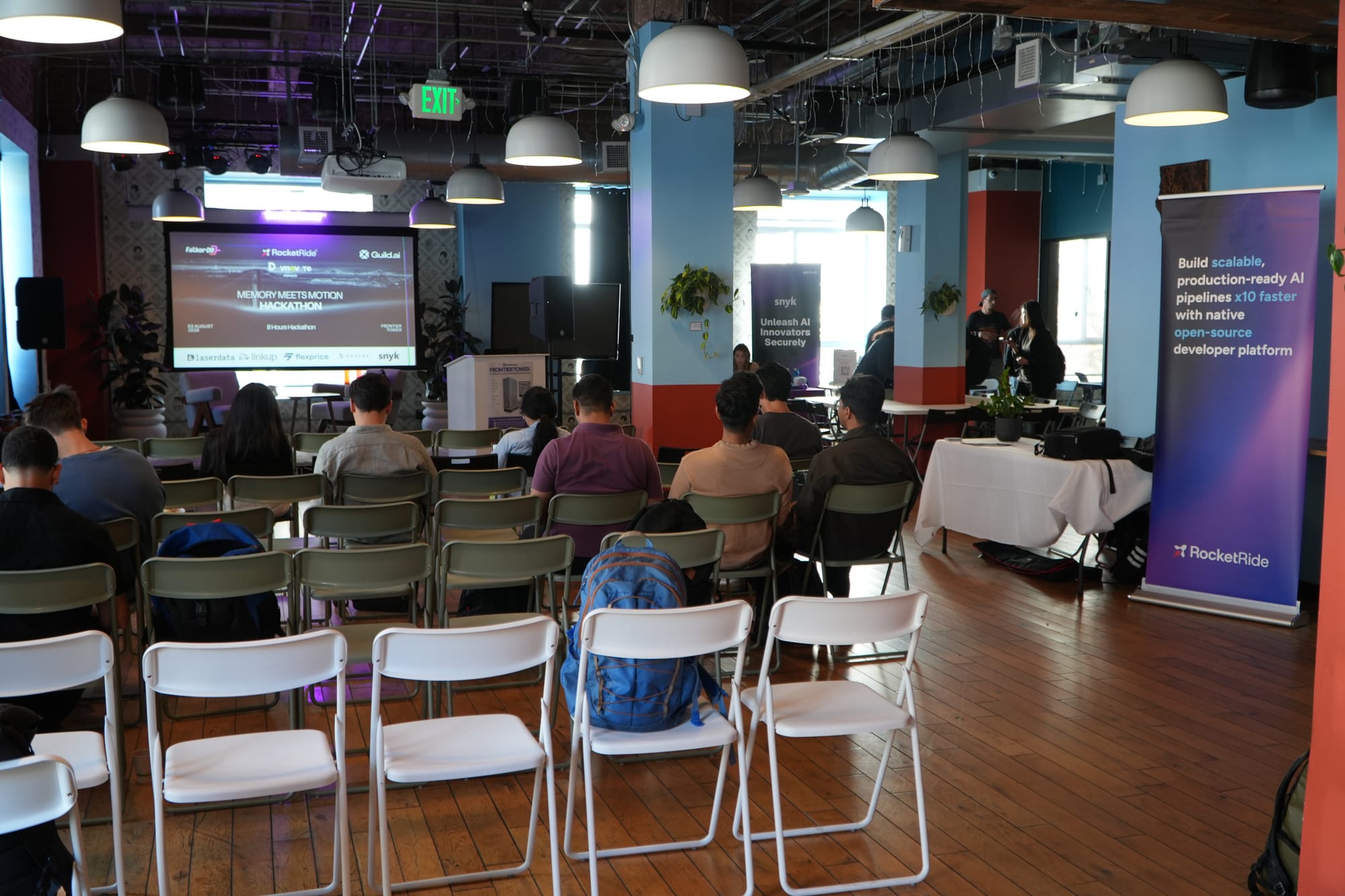
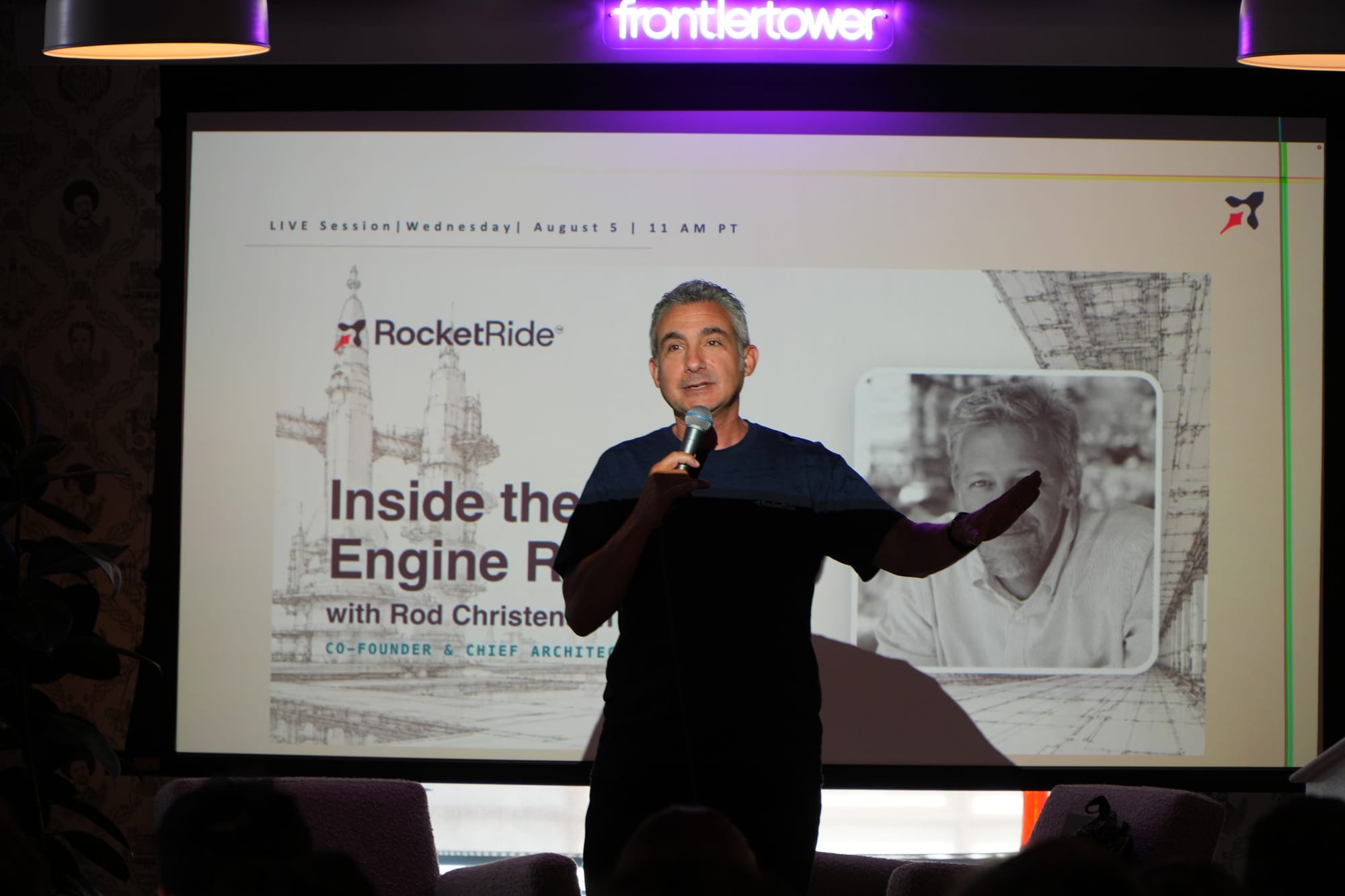
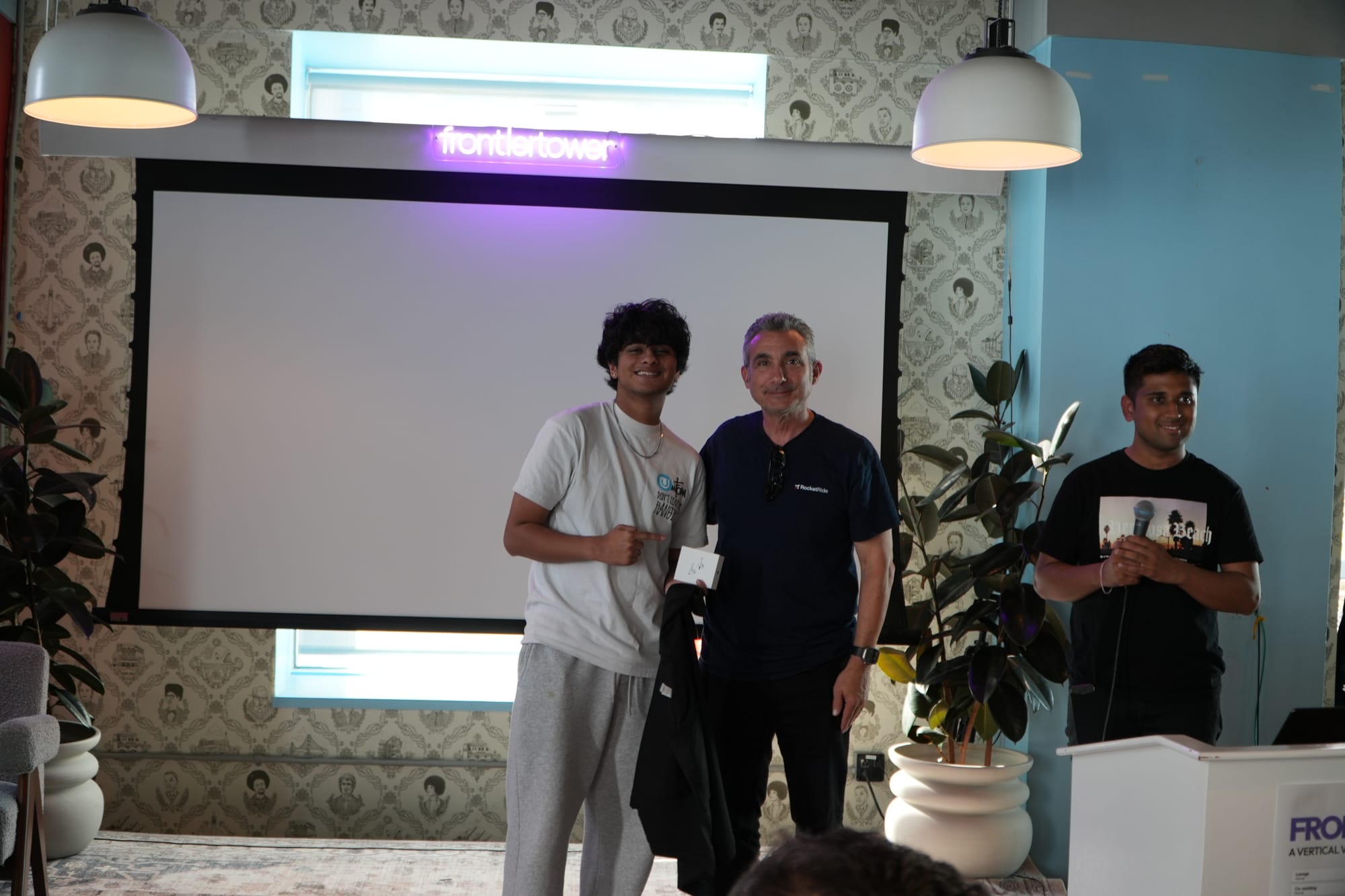
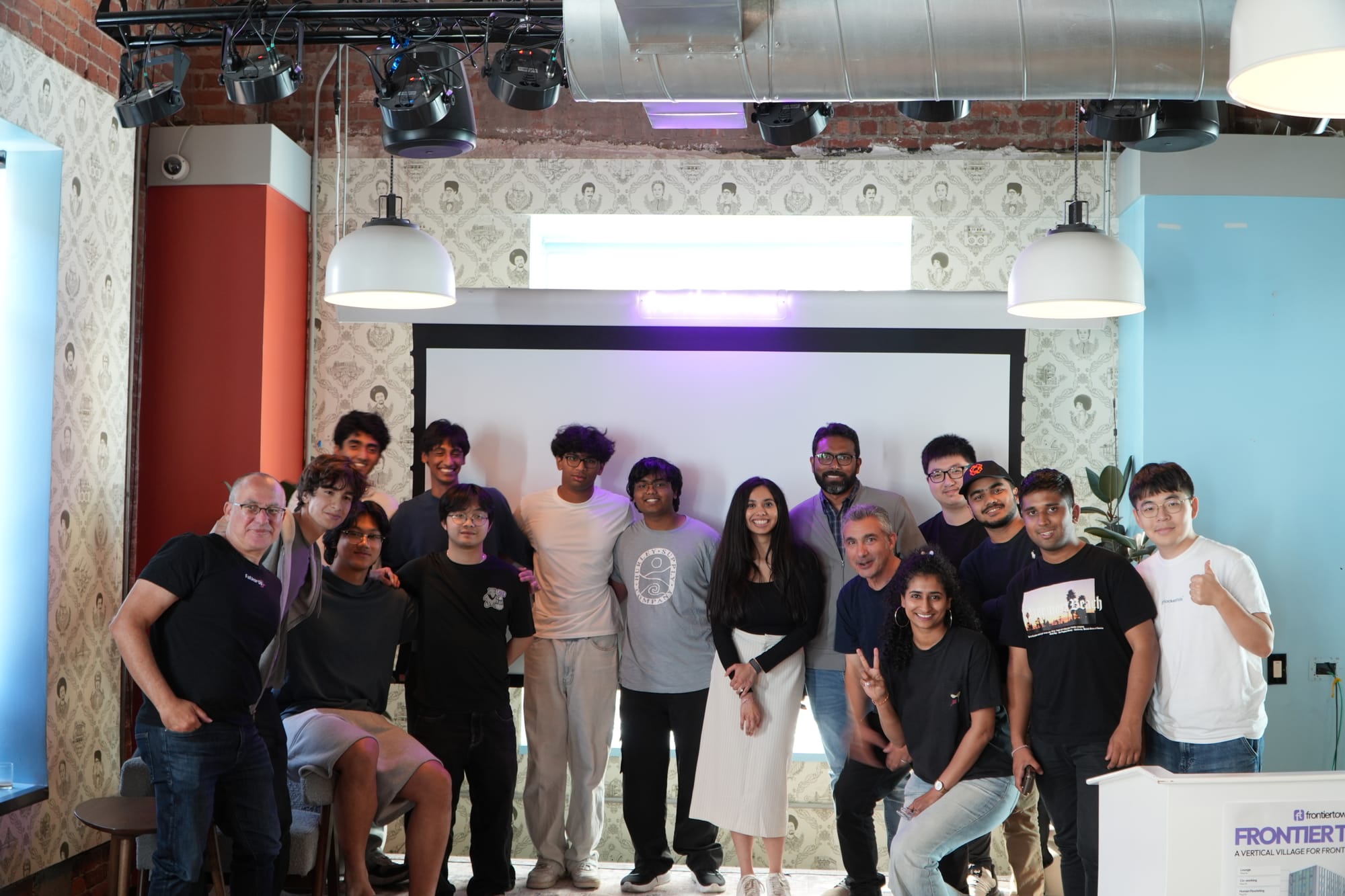
The whole day at Frontier Tower circled one tension: long-term context on one side, autonomous execution on the other. Teams shipped agentic workflows and stateful AI, every crew got Cloud credits to build on managed pipelines, and five teams made it to the live demos.
Here's what the podium built.
🥇 Atrium is a classroom with memory. Its core insight: two students with the same failing score rarely have the same problem, one drops negative signs, the other applies operations out of order, and a gradebook can't tell them apart. Atrium can, because its memory is a graph. It groups students by why they're stuck, adapts the assignment per room without lowering rigor, and produces tomorrow's teaching plan, all rendered as a living isometric school that rebuilds itself after every assignment. Four RocketRide pipelines do the heavy lifting, from OCR on the uploaded assignment to synthesizing the next day's lesson.
🥈 HandOff fires the moment an employee resigns. It maps everything they own, works out what dies with them, and interviews them by voice about the reasoning that was never written down, turning a resignation into real Jira handoffs, calendar invites, and a memory of how they thought. RocketRide sequences the whole rescue pipeline end to end over an authenticated Cloud session, including a portable .pipe pipeline that grades the departing engineer's answers into a durable handover note. In the builder's own words: "Loved building with RocketRide, it really helped me orchestrate my project. Had a little hard time building .pipe but it was definitely fun to learn."
🥉 HumanHarness puts a team of AI agents on your live video feed. Multiple agents watch the same stream you do, each with its own expertise and voice, debating what they see and advising while you steer: strategy coaches while you game, engineers while you repair, narrators for visually impaired users. The name is the point: a team pulling in harness, with the human holding the reins. We'd be lying if we said the name didn't win us over a little.
🏆 Best Use of RocketRide: runbook turns a real Slack complaint into an evidence-backed incident plan. A read-only Slack intake raises the alert, the knowledge graph supplies service, deploy, and past-incident context, and RocketRide runs the diagnosis and remediation inference. Then comes the part that won our respect: a human must approve, reject, or modify every proposal, connector actions stay dry-run previews by default, and even an approved fix ships as a draft PR on a feature branch, never straight to main. The resolution is written back as durable incident memory, so the next incident starts smarter. Production discipline, at a hackathon.
None of it runs without the people backing the day. Full thanks to our partners FalkorDB, Guild.ai, LaserData, Linkup, and Snyk, and to every mentor and judge who showed up.
A new member hit a configuration problem at midnight and asked in Discord. The answer already existed; a human still had to find it and deliver it by morning. Krish and Mithilesh decided the documentation was never the problem, the path to it was, and built Rocket Ralph: a multimodal RAG pipeline, 21 components on the canvas, answering in the channel around the clock.
The best part is the guardrails. Ralph cannot claim a search he never ran, retrieval is gated at a 0.7 similarity score, and billing questions always go to a human. How each rule is enforced by the pipeline instead of the prompt is in the full post. And if you want to see Ralph in action, join the Discord and ask him your questions.


Member discussion